
Deck cleaning and maintenance keeps your timber free of mould, algae and grime and keeps its protective coating topped up, so the deck never falls back into needing a full restoration. At Sydney Deck Maintenance, we clean decks properly without the damage of high-pressure blasting, then buff sand and recoat them on a regular cycle that suits your exposure.
Regular maintenance is the cheapest way to own a timber deck. A deck maintained every 12 to 18 months costs far less over its life than one left until it is grey, slippery and peeling.
| Service | What it involves | When you need it |
|---|---|---|
| Deep clean | Removing dirt, mould, algae, moss and tannin staining from the timber and the gaps | Mould, green or black patches, slippery surfaces |
| Buff sand | A light sand that removes surface wear and opens the timber to accept a new coat | Coating faded but not failed |
| Maintenance recoat | One or two fresh coats of the same oil or stain system | Every 12 to 18 months for most Sydney decks |
| Fixings check | Punching lifting nails and re-fixing loose boards | Every visit |
| Condition report | Flagging boards, steps or handrails that need attention | Every visit |
No, we do not recommend high-pressure washing for timber decks. High-pressure water tears the soft fibres of the timber, leaves a rough, furry surface and can etch visible wand marks into the boards. It also drives water deep into the timber, which then needs days to dry before it can be coated.
Pressure washing is popular because it is quick and looks dramatic on the day. The damage shows up later, when the deck greys faster, feels splintery and absorbs new coatings unevenly. Some timbers, especially softer species and treated pine, can be permanently scarred. We are often called in to sand back decks that were blasted by a cleaning company or a homeowner with a hire-shop machine.
Sydney decks grow mould and algae because of the city’s combination of humidity, regular rain and shaded outdoor areas. Green and black growth is most common on:
Mould is more than a cosmetic problem. It makes timber dangerously slippery when wet, and it holds moisture against the boards, which speeds up rot. Simply washing it off does not solve it. The deck needs a protective coating so water and spores cannot settle into the timber again.
We check how far the growth has spread, whether it has damaged the timber, and what is causing it.
Mould, algae, moss and grime are lifted from the surface and the gaps between boards using timber-safe methods, never high-pressure blasting.
Where mould has penetrated the surface, a full sand removes it along with the old coating, leaving clean bare timber.
Two to three coats of oil or stain seal the timber. For shaded decks we may recommend a water-based product, which resists mould better.
We tell you what is feeding the growth, such as blocked gaps, overhanging plants or poor drainage, and how to fix it.
For poolside and high-traffic areas, we can add a grip additive to the stain for extra safety. See our non-slip deck coating service.
A maintenance programme means we come back before your coating fails, rather than after. It is how we keep many of our customers’ decks looking new year after year.
The result is a deck that always looks good, a coating that never fails completely, and no big restoration bills. It also protects your timber’s structure, because boards that stay coated rarely rot.
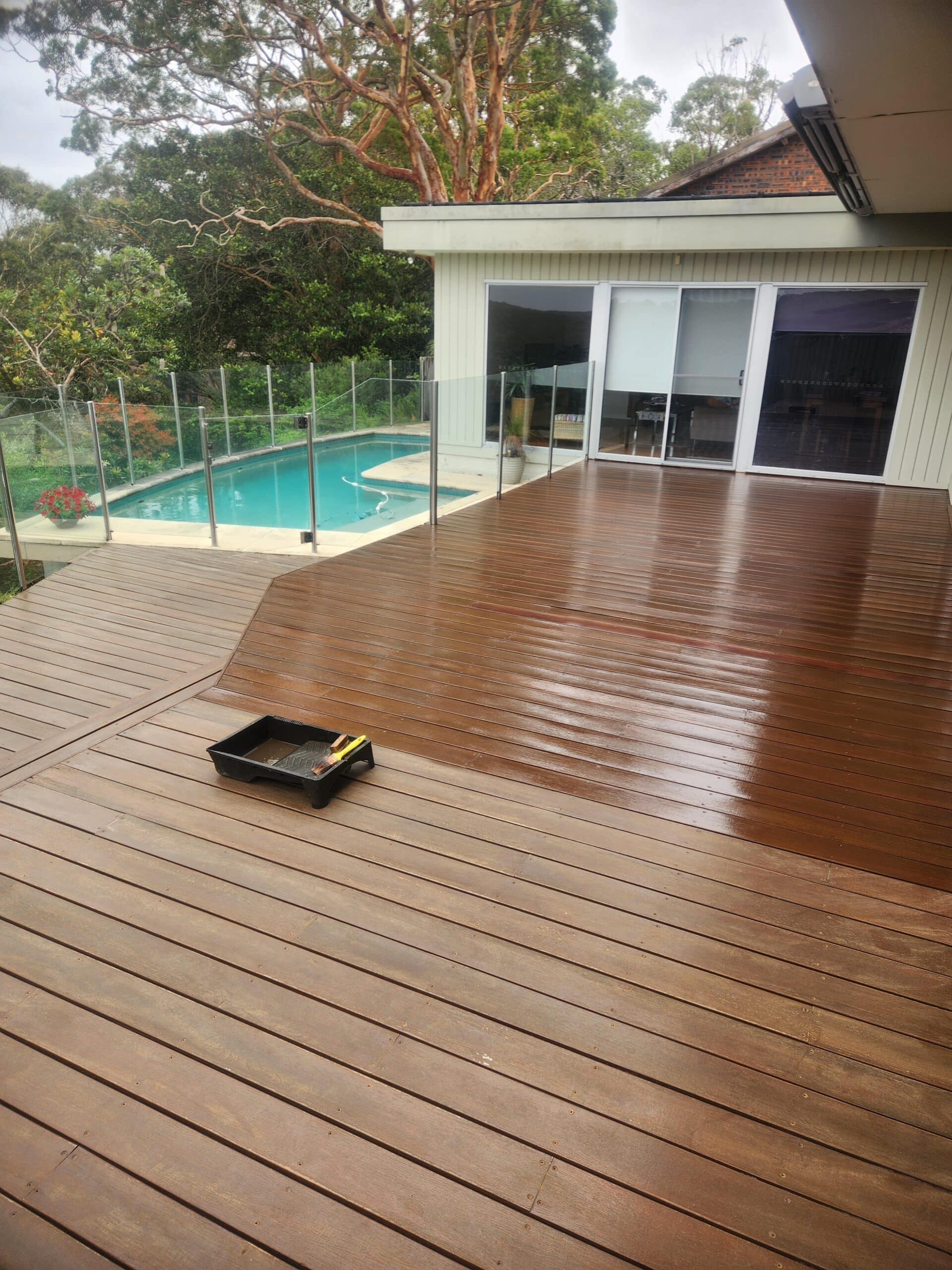
Most Sydney decks need a maintenance recoat every 12 to 18 months. The right interval depends on how hard your deck works.
| Deck type | Maintenance interval |
|---|---|
| Full sun, north or west facing | About every 12 months |
| Coastal, salt air | About every 12 months |
| Pool surrounds | Every 12 months or sooner |
| Shaded, prone to mould | 12 months, with a mid-year clean |
| Covered or partly sheltered | 18 months or longer |
| Commercial, high foot traffic | Scheduled to suit use, often every 6 to 12 months |
The signs a deck is due: water soaks in rather than beading, the colour has lightened or gone patchy, traffic paths look dull or grey, or mould is starting to appear.
| Season | What to do |
|---|---|
| Spring (Sep to Nov) | Best time for a maintenance recoat before summer sun. Sweep out winter leaf build-up. Check for mould in shaded corners |
| Summer (Dec to Feb) | Peak UV. Hose off pool chlorine and salt. Move pot plants and rugs regularly so timber can dry |
| Autumn (Mar to May) | Clear falling leaves from the gaps. Another good window for coating while it is mild and dry |
| Winter (Jun to Aug) | Shaded decks grow mould fastest. Keep gaps clear and sweep regularly. Plan your spring recoat |
Simple care between visits extends the life of your coating considerably:
What not to use: household bleach, strong chlorine-based cleaners, wire brushes and high-pressure washers. All of them damage timber or strip the coating.
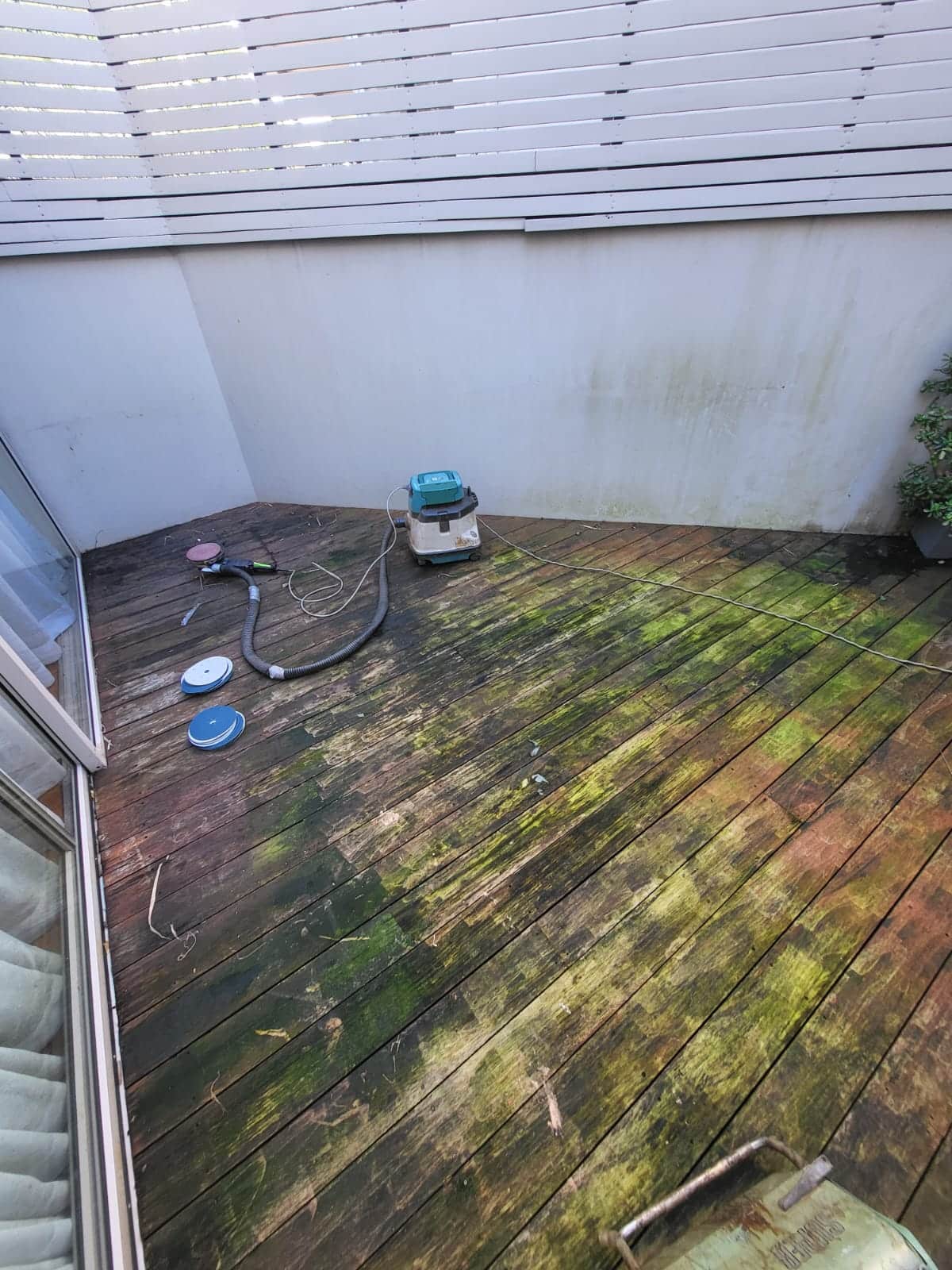
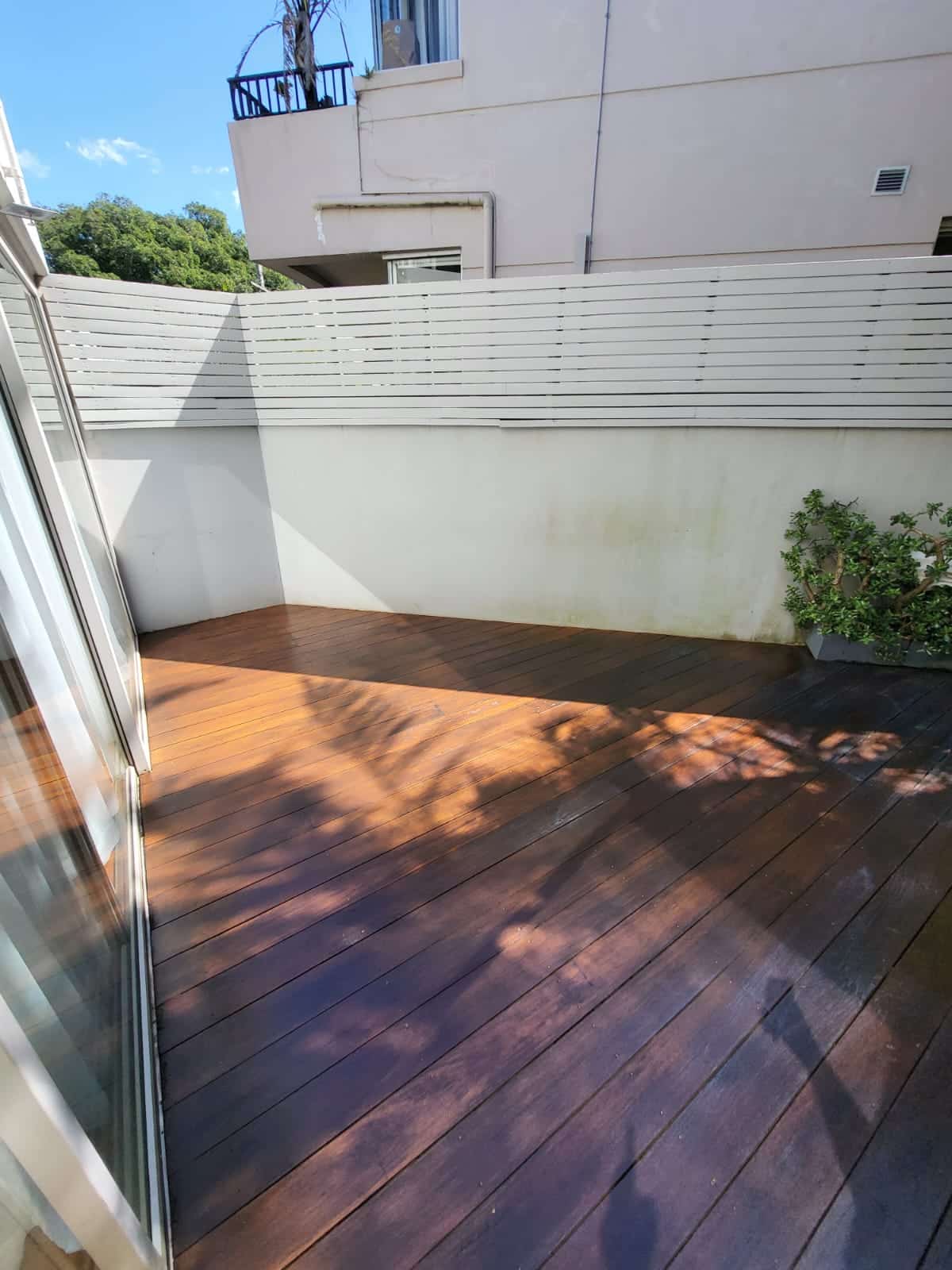
Mould and algae had built up on this shady, damp deck until it was dangerous to walk on and nearly unusable. A deep clean and full sand back showed the timber underneath was still in good condition. After a few coats of H2Oil Natural Stain, it came up beautifully.
This fully exposed deck had started to lighten as the stain wore. A buff sand and two coats of H2Oil Natural Stain brought it back without a full restoration. This is what a maintenance visit is designed to do.
This deck and handrail sat in shade most of the day and had grown mould on the surface. We sanded off the old coating and mould, then applied three coats of stain to protect it.
Green moss and mould had made this poolside deck dangerously slippery when wet, and the owner was worried about his children. After sanding, we added grip powder into the staining process for a textured, safer finish.
We run scheduled deck maintenance for strata schemes, hotels, real estate agencies and building managers, including JLL, Frasers Property and Crowne Plaza. Common-property decks, pool areas, rooftop terraces and boardwalks take far more traffic than a home deck, so they need planned maintenance to stay safe and presentable.
We can stage work to keep areas open, work around residents and guests, and provide a regular schedule so committees and facilities managers can budget ahead.
The cost of deck cleaning and maintenance depends on the size of your deck and how far the coating has worn. Every deck gets a free, fixed on-site quote. The main factors are:
Green mould and algae are removed with a deep clean, then a sand back if the growth has penetrated the timber, followed by fresh coats of oil or stain. Without a new coating, mould usually returns within months.
The best way is a soft broom, water and a mild timber-safe cleaner, scrubbed along the grain and rinsed well. Avoid high-pressure washers, bleach and wire brushes.
Yes, high-pressure washing can tear timber fibres, leave a furry surface, etch wand marks and force water deep into the boards. We do not use it on timber decks.
Sweep weekly, wash lightly every few months, and have it professionally cleaned and recoated every 12 to 18 months. Shaded or poolside decks may need more frequent cleaning.
Usually, yes. A deck that turns slippery when wet often has a film of mould or algae on the surface. Cleaning and recoating fixes it, and a grip additive can add extra safety.
Yes. Many of our customers book an annual or 18-month maintenance visit, and we remind them when they are due.
Our service is designed for timber decks. Contact us if you have a composite deck and we will tell you whether we can help.
Deck cleaning removes dirt and growth and is followed by a maintenance recoat. Deck restoration is a full sand back to bare timber, repairs and new coats, needed when the coating has failed.
Upload photos of your deck through our quote form or call Niall on 0449 183 440. We will tell you whether you need a clean and recoat or a full restoration, and set up a maintenance plan that suits your deck.