Deck oiling and staining is what protects your timber from UV, rain, salt air and foot traffic, and what gives your deck its colour. At Sydney Deck Maintenance, we apply penetrating oils and stains over properly sanded, bare timber, in two to three coats, using techniques that avoid the lap marks and patchiness you see on rushed jobs.
We have worked with more than 3,000 residential clients across the Sutherland Shire in the past 15 years. Niall will recommend the right product for your timber and exposure, and tell you honestly if your existing coating limits your options.
Deck oil nourishes and protects timber while keeping its natural colour. Deck stain contains pigment that adds colour and extra UV protection while still showing the grain. Both soak into the timber rather than sitting on top as a film, which is why they are the right choice for most Sydney decks.
| Finish | What it does | Best for |
|---|---|---|
| Clear or natural oil | Penetrates and protects, shows the timber’s own colour | Good-condition hardwoods where you love the natural tone |
| Tinted stain | Adds pigment and UV resistance, grain still visible | Faded or mismatched boards, colour changes, high-sun decks |
| Solid paint or opaque coating | Forms a film that hides the grain | Decks too far gone to look good stained. Not a service we recommend for good timber |
Paint and film-forming coatings tend to peel on decks, because timber moves with every change in moisture and temperature. Once a film cracks, water gets underneath and the coating lifts. Penetrating oils and stains wear away gradually instead, which makes them far easier to maintain.
Oil-based coatings soak deeper and give a rich, traditional look, while water-based coatings dry faster, resist UV and mould better and clean up with water. Neither is right for every deck. The choice depends on your timber, your exposure, the look you want and what is already on the deck.
| Oil-based | Water-based | |
|---|---|---|
| Look | Rich, warm, deep colour | Slightly lighter, more natural |
| Penetration | Deeper into the timber | Shallower, with a protective surface layer |
| Drying time | Slower, often overnight between coats | Faster, often recoatable the same day |
| Mould resistance | Lower, as natural oils can feed mould in shade | Higher |
| Application | More forgiving | Harder to apply evenly, shows lap marks if rushed |
| Clean-up and odour | Solvent clean-up, stronger smell | Water clean-up, low odour |
We use quality professional-grade products in both categories, including H2Oil Natural Stain, which we have used on many of the projects in our gallery.
No, not reliably. Different coating systems often will not bond to each other, and switching between them without sanding back to bare timber is one of the most common reasons we see decks peel, blotch or stay sticky.
This is the single biggest mistake we see in DIY and handyman staining. If you are not sure what is on your deck now, tell us during the quote. We can identify it and, if needed, sand it back so your new coating has a clean start. See our deck sanding service.
The right colour depends on your timber, the sun your deck gets and how your home looks. A few rules of thumb from 15 years of colour choices:
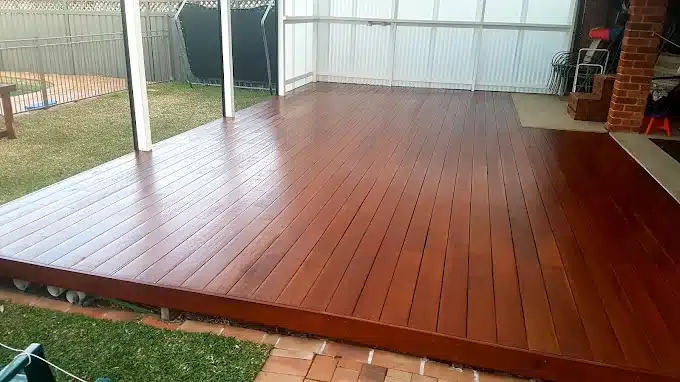
Colour on a tin card rarely matches colour on your timber. Every species takes pigment differently, so we recommend a test patch on your own boards before committing.
Good coating work is mostly preparation and patience. This is how we do it.
We identify your timber and the existing coating, and recommend a product, colour and number of coats.
Old coatings and grey timber are sanded off with dust extraction. A deck in good condition may only need a buff sand.
Dust is vacuumed from the surface and the gaps, so it does not end up trapped in the finish.
We avoid coating in hot direct sun, before rain or on damp timber, all of which spoil adhesion and finish.
Board ends, edges and areas against walls are cut in with a brush.
We coat two or three boards at a time, end to end, keeping a wet edge so there are no overlap marks.
Usually two to three, with the correct drying time between each.
Steps, fascia boards and handrails are coated at the same time so the whole deck matches.
Lap marks are the darker stripes you see where wet coating has been brushed over coating that has already started to dry. They are the most visible sign of a rushed job.
We avoid them by working along full board lengths, keeping a wet edge and using the right applicator for the product. A lambswool applicator suits oil-based products. A flat pad applicator is better for water-based products, which dry faster and are less forgiving. Our blog post on staining your deck explains these steps in more detail for anyone doing it themselves.
| Timber | Coating notes |
|---|---|
| Merbau (kwila) | Bleeds tannin, especially when new. Allow it to weather first, and protect nearby concrete and paving from run-off |
| Spotted gum | Very dense, so oil penetration is limited. Fine sanding and a suitable product make the difference |
| Blackbutt | Pale timber that suits natural tones but shows dirt, mould and wear quickly |
| Jarrah | Rich red tone that suits natural and red-brown stains |
| Tallowwood | Naturally oily, which affects how some coatings bond |
| Treated pine | Soft and absorbent. Needs more frequent recoating, and tinted stains help disguise its green tinge |
Most new hardwood decks should weather for two to four months before the first coat. That gives the timber time to release its natural oils and tannins, which would otherwise stop the coating soaking in and bonding properly.
One of our customers in Kensington spent thousands on a new deck and was worried by how it looked after the builder applied a coating. We explained how important correct first-time treatment is, and now her deck is fully protected and looking new again.
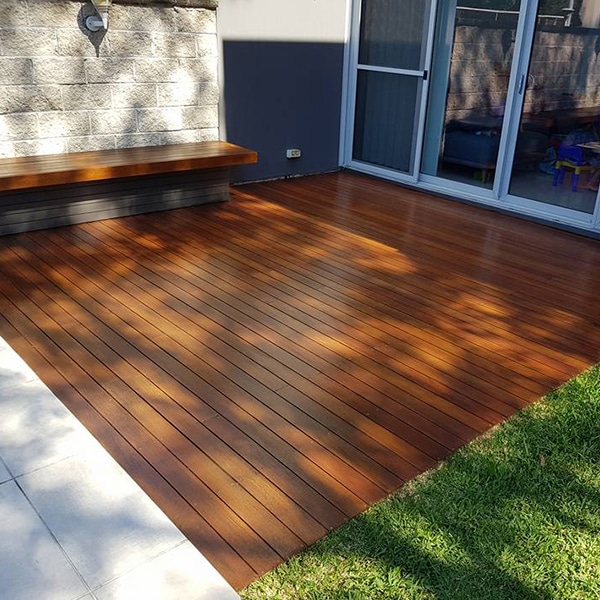
Most Sydney decks need a fresh coat every 12 to 18 months. The exact interval depends on how much sun, rain, salt and foot traffic your deck gets.
| Exposure | Typical recoat interval |
|---|---|
| Full sun, north or west facing | Around 12 months |
| Coastal, salt air (Cronulla, Kurnell, Bundeena) | Around 12 months |
| Pool surrounds and high-traffic areas | 12 months or sooner |
| Partly shaded or covered | 18 months or longer |
The signs it is time: water stops beading on the surface, the colour lightens or goes patchy, and the high-traffic paths look dull. Recoating before the coating fails completely means a buff sand and fresh coats rather than a full restoration. See our deck cleaning and maintenance programme.
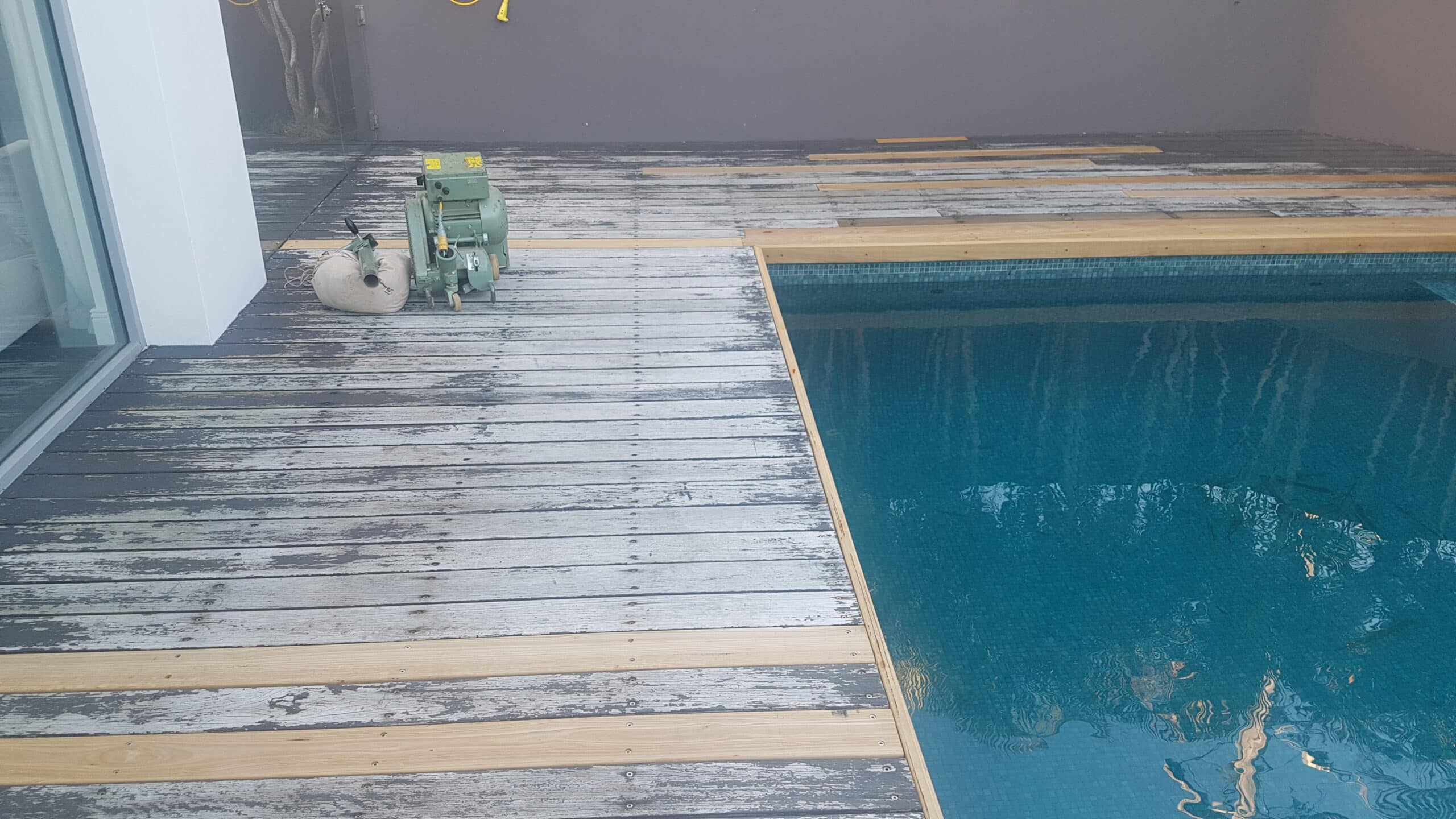
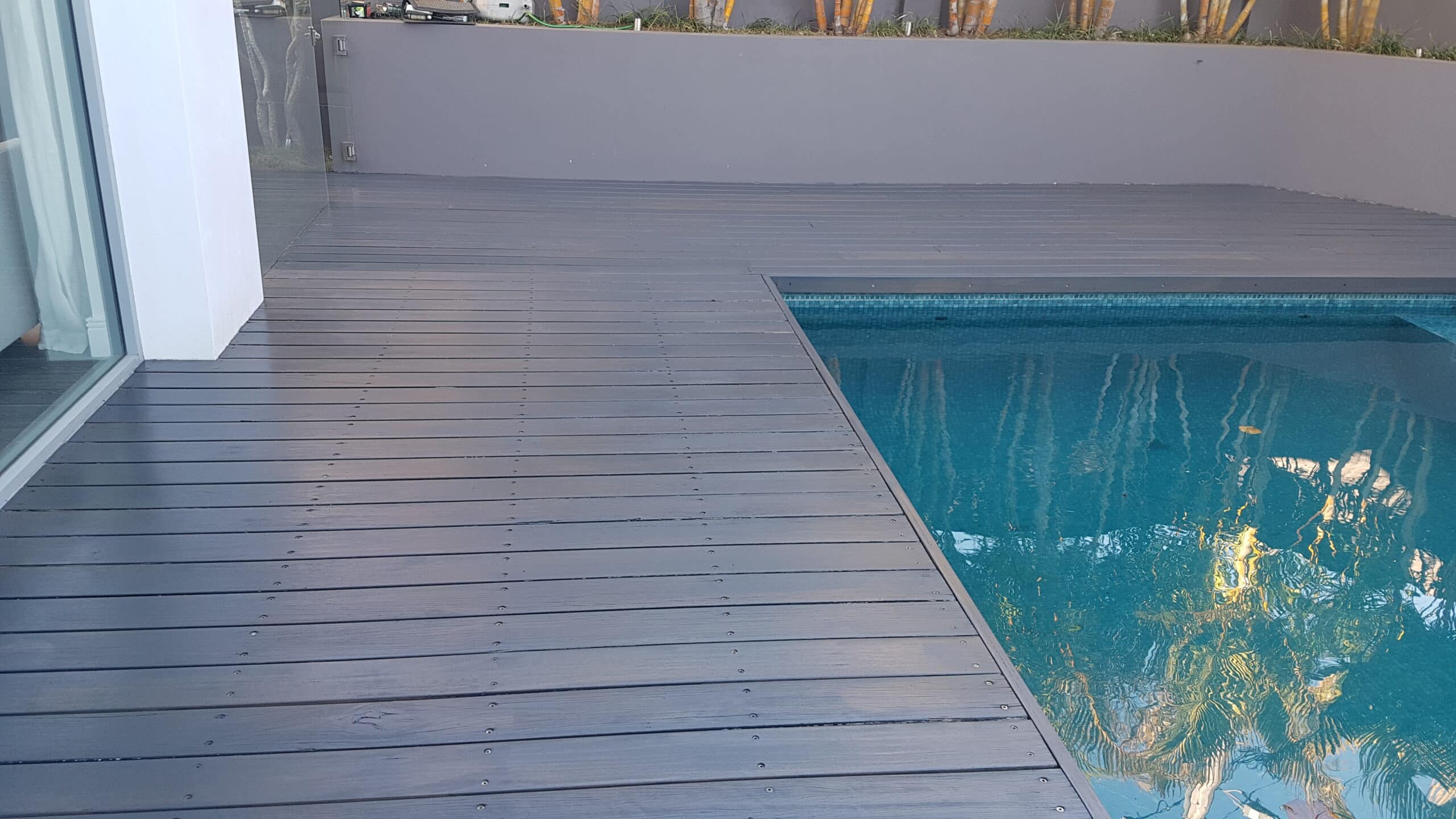
Rotten boards and patchy old stain had left this deck looking tired. After replacing the boards, we sanded it to bare timber and applied a grey stain for a modern finish.
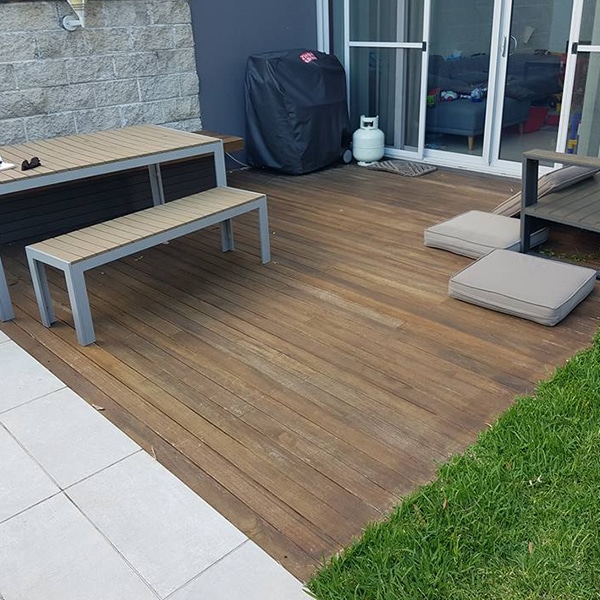
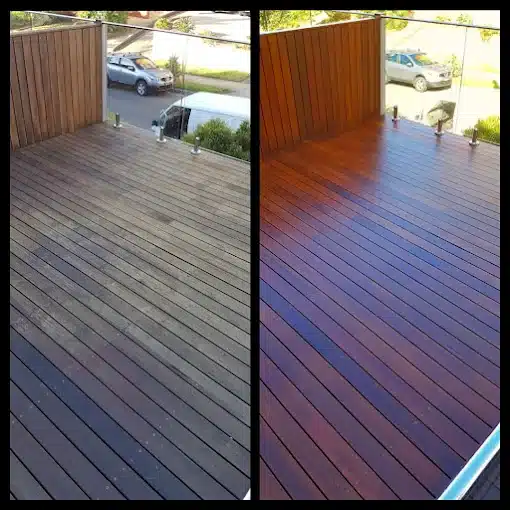
This fully exposed deck had started to lighten in colour as the stain wore. A buff sand and two coats of H2Oil Natural Stain brought it back to looking its best, without a full restoration.
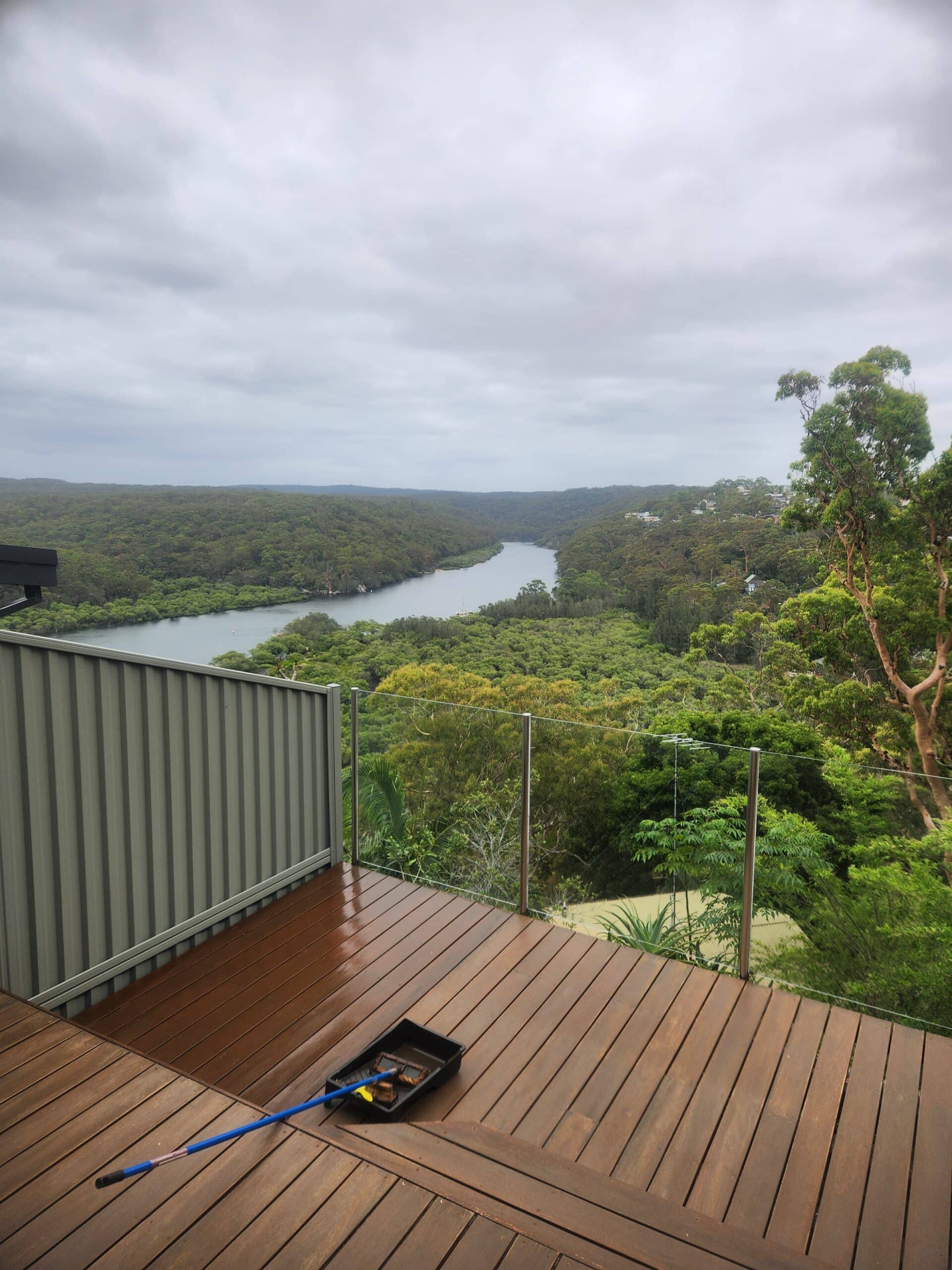
The deck and handrail had grown mould because they sat in shade most of the day. We sanded off the old coating and mould, then applied three coats of stain. The area is now protected and looks like new.
This deck had a few replacement boards in a different timber. Instead of paying to replace them again, we applied a darker tint stain that blended everything together and kept the cost down.
The cost of oiling or staining a deck depends on its size, condition and the coating system you choose. Every deck gets a free, fixed on-site quote. The main factors are:
Most decks need two to three coats. Bare or heavily weathered timber absorbs more and benefits from three, while a maintenance recoat on a well-kept deck may only need one or two.
Water-based coatings are often touch-dry within a couple of hours, while oil-based coatings can take overnight. Humidity, temperature and shade all slow drying. We give you exact times for the product used.
Neither is better for every deck. Staining adds colour and extra UV protection, which suits faded, mismatched or high-sun decks. Oiling suits good-condition timber where you want the natural colour.
Only if it is the same type of product and still in good condition. If the old stain is peeling, patchy or a different system, it needs to be sanded off first.
The best deck oil is the one that suits your timber, sun exposure and existing coating. Water-based products tend to resist mould and UV better in Sydney’s humid, sunny conditions, but oil-based products still suit some timbers and give a richer look.
Sticky oil usually means too much product was applied, it was applied over an incompatible coating, or it was applied in cool or humid conditions. Excess oil that has not soaked in sits on the surface and stays tacky.
Yes. We coat steps, fascia boards and handrails at the same time as the deck so the colour matches throughout.
Yes. A full sand back to bare timber lets you move to a different colour, including going from a dark stain to a lighter one.
Upload photos of your deck through our quote form or call Niall on 0449 183 440. We will recommend the right product and colour for your timber and give you a fixed price on site.